
Opinion
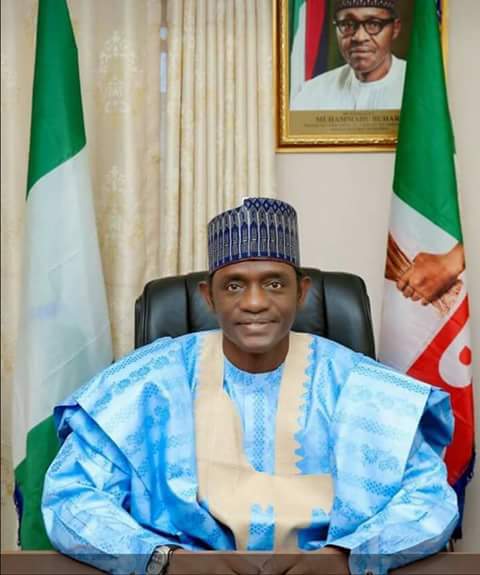
Why Yobe will remember Gov Buni for generations

|
Getting your Trinity Audio player ready...
|
Why Yobe will remember Gov Buni for generations
By hussaini ibrahim
On Saturday, the 18 of April 2026, I attended the 2026 Omoigui Memorial Lecture, a virtual event held in honour of the late Justice Charles Omoigui. The lecture, themed Holding the Centre: Family, Institutions, and Public Trust in an Age of Insecurity, centred on the urgent need to rebuild society and restore public trust as foundations for sustainable peace and national stability.
In his keynote address, former chairman of the Independent National Electoral Commission, Professor Attahiru Jega, emphasised the critical role of strong institutions in guiding citizens and maintaining societal order.
Institutions are bodies that guide millions of people in their daily lives and help societies respond to the demands and aspirations of citizens, he said. Effective institutions remain central to national stability, while weak structures often create room for insecurity and loss of confidence in government.
Prof. Jega cited the rise of internet fraudsters and bandits as clear examples of how intelligence and organised groups can be misused to sow unrest when institutions fail. He also attributed the growing incidence of jungle justice and extra-legal responses to crime to the inability of government agencies to effectively discharge their responsibilities.
Whenever government fails, he warned, people establish alternative systems of authority, and that further disrupts society.
A careful reflection on prof. Jega’s insightful remarks led me to a compelling conclusion: the very qualities and institutional mechanisms he advocated have been consistently and successfully applied in Yobe state under the leadership of his excellency, governor Mai Mala Buni, with visibly positive results.
As a son of the soil who rose through the ranks with quiet determination and humility, governor Buni has touched the hearts of communities across Yobe. Mothers no longer weep in despair over distant or inadequate hospitals. Farmers now move with greater ease on newly paved roads. Young people dare to dream bigger dreams, while entire families have found shelter and renewed hope in decent homes. His leadership has stirred a profound sense of pride and gratitude among Yobeans, who have witnessed their state rise steadily from the ashes of insurgency transforming pain into progress and fear into flourishing.
As his tenure approaches its defining conclusion, conversations across communities, political circles, and public spaces continue to reflect deeply on what his leadership has meant for the state. For many Yobeans, the governor’s legacy is one that will be remembered for generations.
It is this tangible embodiment of strong institutions, stability, and people-centred governance that explains why the Buni years are increasingly viewed not merely as a period of recovery, but as a foundational era that has laid the groundwork for Yobe’s long-term progress and prosperity.
A Period Defined by Rebuilding and Stability
Yobe state has, over the years, faced complex challenges ranging from insecurity to infrastructural deficits and socioeconomic strain. The scars of Boko Haram’s devastation ran deep, leaving families displaced, communities shattered, and hearts heavy with loss. Against this backdrop, the Buni administration positioned itself around rebuilding institutions, restoring public confidence, and gradually strengthening governance structures with a fatherly compassion that healed divisions and mended broken spirits.
Infrastructure as a Visible Legacy
Across the state, infrastructure remains one of the most visible signs of government presence and the one that brings tears of joy to residents eyes. Road networks linking rural and urban communities have been expanded and rehabilitated, improving movement, trade, and access to services. For many residents, these developments are not abstract achievements. They represent reduced travel time, better access to markets, improved access to healthcare facilities, and stronger economic activity in local communities moments when a father can reach his sick child in time or a trader smiles as goods flow freely.
The transformation is deeply felt across Yobes three senatorial zones, with hundreds of projects executed and many upgraded for lasting impact. Governor Buni has ensured even distribution of development across all zones, touching every local government area with visible infrastructure, education, health, housing, and economic projects.
In Zone A (Yobe East Senatorial District) projects include construction and rehabilitation of roads such as the Gujba-Ngalda road and other township roads, primary healthcare centres upgraded or newly built across wards, modern primary and secondary schools with classrooms and furniture provided, housing units as part of the mass housing scheme, solar-powered boreholes and water reticulation systems, agricultural support with farm inputs and equipment, and electrification projects in communities.
In Zone B (Yobe South Senatorial District) Damaturu, Fika, Fune, Nangere, and Potiskum the heartbeat of the state quickens with mega achievements that make every Yobean swell with pride. The Damaturu flyover and underpass (nearing completion), the expanded 26km Damaturu Kalallawa dual carriageway leading to the Muhammadu Buhari International Cargo Airport (now fully operational with 24-hour ground lighting and set for commercial flights and 2026 Hajj Operations), Potiskum dual carriageway, and the massive truck transit park (85%+ complete) are opening doors to economic hope and global connectivity.
The reconstructed and upgraded 27th August Stadium Damaturu modeled to FIFA standards with modern seating, playing surface, drainage, fencing, dressing rooms, cafeteria, and VIP sections stands ready to host hearts and heroes. The Damaturu Ultra-Modern Motor Park (ongoing, with clinic, restaurant, mechanic section, and drivers lodge) will ease transportation burdens, while the Yobe city mall centre, Damaturu Modern Market (with 800 shops, bank, police station, abattoir, water facility, and concrete drainages), and newly constructed city mall center are turning the capital into a bustling commercial hub.
Residents now move with lighter hearts on the 11km Damaturu to Gambir road, the 6km road linking Gujba road housing units to Potiskum road, the reconstruction of bridge and road at Waziri Ibrahim bypass, township roads at Zanna Zakariya, Dabo Aliyu, Ben Kalio, Moduri, Mallamatari, and the road at industrial layout, plus the Afghanistan access road and electrification of sumsumma, Mallamatari and other communities.
The Damaturu waterway project with mega culverts and drainages, remodelling of family support roundabout, school of nursing roundabout, and the new roundabout at airport junction, alongside city gates, are giving Damaturu a beautiful, modern face.
Further lifting spirits are the revived Yobe polythene & woven sacks industry, the newly constructed sesame cleaning, processing & packaging factory, 1,000 housing units, model school near Buhari estate, mega school at new bra bra, and the temporary site of college of integrated sciences. At the Yobe State University Teaching Hospital (YSUTH), the newly constructed maternity and child hospital, clinical section of the medical college, and biortc at ysu are saving lives and advancing medical excellence. Multiple primary healthcare centres (phccs) have been reconstructed and upgraded including Gambir, Murfa Kalam, Gwange, Kalallawa, Forestry, and Mairi while doctors quarters along Potiskum road bring comfort to caregivers.
Rehabilitation of the Yobe state secretariat, ministry of women affairs, presidential lodge, Yobe printing press, and Yobe line terminus, plus new office complexes for the ministry of housing, ministry of health, Yobe investment, bureau of public enterprises, and aiseb, together with medical stores, reflect a governor who is rebuilding institutions with care and vision.
These projects fill the people of Damaturu and zone b with overwhelming pride and hope for a brighter tomorrow. Additional projects in zone b include 5km township roads in Fika, Nangere, and Fune local government headquarters, over 25km of roads within Potiskum metropolis, upgrading of general hospital Potiskum to a specialist hospital with modern equipment, modern mega primary schools in each local government area, and agricultural empowerment initiatives.
In Zone C (Yobe North Senatorial District) projects include construction and rehabilitation of major roads such as Potiskum-Gashua, Gashua, Damaturu-Babbangida-Bayamari, Bayamari-Geidam-Bukarti, and other inter-township roads, primary healthcare centres and general hospitals upgraded across local government areas, new model schools, mega schools, government girls day senior secondary schools, and co-education secondary schools, housing units under the mass housing policy, solar-powered boreholes and improved water supply schemes, livestock development centres, sesame processing and other agricultural facilities, electrification of communities, and urban renewal projects with drainages and streetlights.
Public buildings, institutional upgrades, and urban renewal projectsincluding 131 road projects statewidehave reshaped the physical landscape, leaving every zone transformed and every heart lifted. Governor buni also constructed thousands of housing units across the 17 local government areas with basic facilities, established six new model schools, seven mega schools, nine new government girls day senior secondary schools, eight new co-education government day senior secondary schools, and one idp school in Buni Yadi. The Muhammadu Buhari International Cargo Airport was completed to boost agricultural exports. Power lines were rehabilitated and strengthened across zones, including Damaturu-Potiskum and Potiskum-Gashua lines. Over 170 motorised boreholes were converted to solar systems, and new boreholes drilled in major towns. Agricultural support reached thousands of farmers with tractors, inputs, and empowerment programmes. Primary healthcare centres were built or upgraded in all 44 political wards statewide.
Investment in education and human capital… remains largely as previous, with Buni foreign scholarships scheme (BFSS) and employment of graduates, including automatic employment for hundreds from Shehu Sule College Of Nursing and Midwifery and other institutions. Additional efforts include construction of new classrooms, teacher recruitment, vocational training, girls education initiatives, and mobile learning units.
Strengthening healthcare delivery… remains as previous, now further supported by the new ysuth facilities and phcc upgrades. This includes modern medical equipment, drugs provision, specialist hospital upgrades in Potiskum and other areas, and maternal and child health complexes.
Housing, agriculture, markets, and more… remains as previous. This covers 2,350 mass housing units at subsidized rates, sesame processing factories in multiple locations including Damaturu and Potiskum, modern abattoirs, livestock centres in all zones, modern markets like Nguru and Gahu’a, truck transit parks, and empowerment programmes with tricycles, sewing machines, and cash grants.
Why many believe his legacy will endure… unchanged
As Yobe state continues its journey of growth and development, the conversation about leadership and legacy remains central. Governor Mai Mala Buni’s administration has, for many, become synonymous with rebuilding, stability, and gradual transformation. Whether viewed through the lens of infrastructure, governance style, or political influence, his impact is likely to remain part of the states narrative for years to come.
In the end, history often remembers leaders not only for what they achieved, but for how deeply those achievements shaped the lives of the people they servedand for many in Yobe, that memory is already taking root, wrapped in pride, tears of joy, unbreakable hope, and an eternal bond of gratitude. Mothers whisper prayers of thanks for the new maternity hospitals and upgraded phccs that saved their children; fathers stand taller on roads like the Damaturu-Gambir link and the flyover that now connect dreams to reality; youths gaze at the Muhammadu Buhari international cargo airport, the remodeled 27th august stadium, the ultra-modern motor park, and the city mall centre, seeing futures once unimaginable; traders bustle with joy in the modern markets and sesame factories; and entire communities gather under electrified streets and new city gates, hearts overflowing with the warmth of a governor who loved them enough to build for generations yet unborn.
Governor Buni, Yobe will remember you not just in stone and steel, but in the living, breathing legacy of transformed lives, restored dignity, empowered youths through foreign scholarships and jobs, and a state that now stands tall with unbreakable spirit. Thank you, sir. Your light will shine in our children’s eyes forever.


