
Opinion
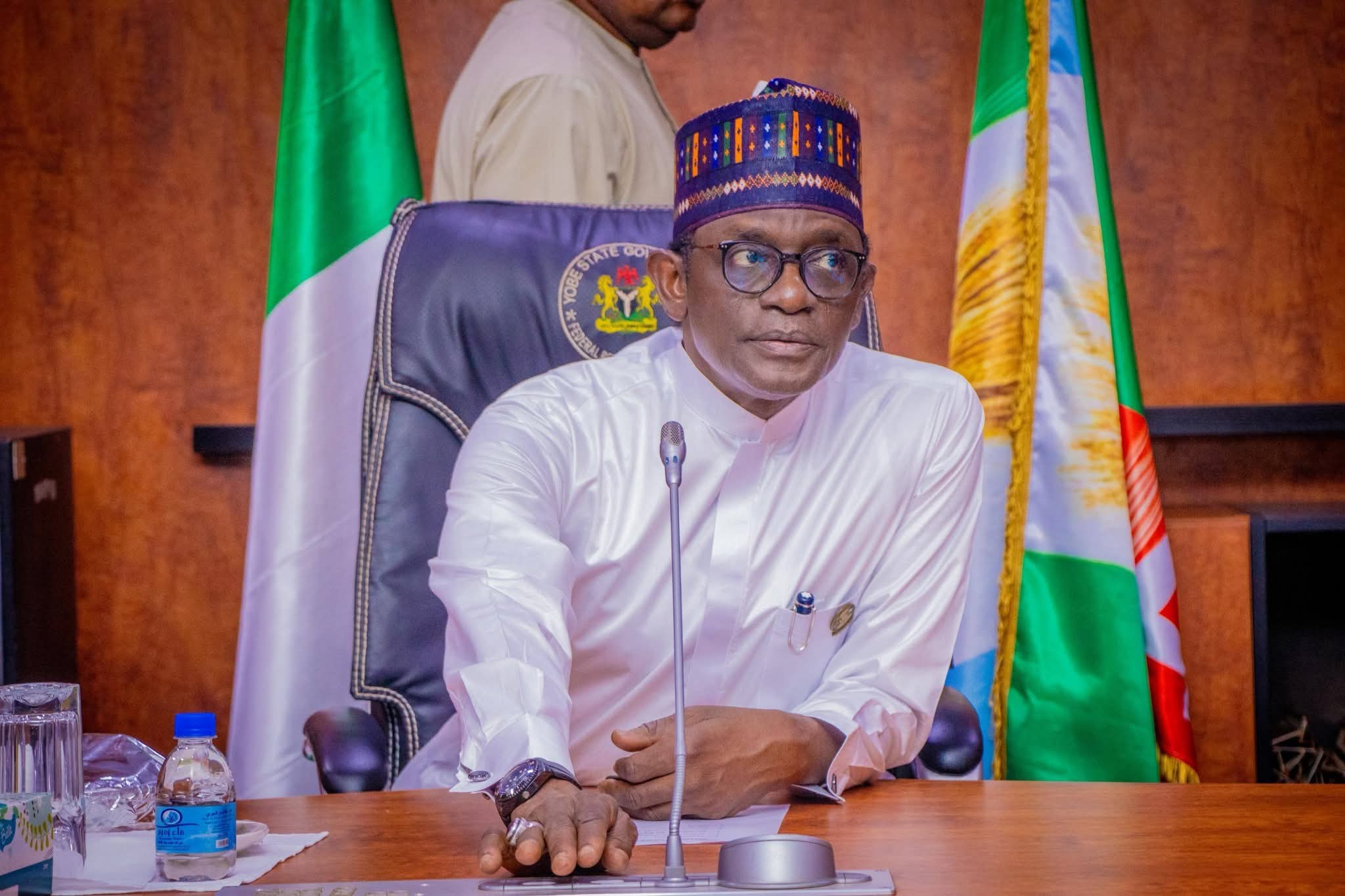
Buni @ 7: Building Legacy, transforming modern yobe

|
Getting your Trinity Audio player ready...
|
Buni @ 7: Building legacy, transforming modern Yobe
By Hussaini Ibrahim
Seven years after taking the reins of Yobe State, Governor Mai Mala Buni’s administration has emerged as one of the most ambitious development experiments in the state’s history. From expanding access to education and healthcare to delivering critical infrastructure and economic empowerment programmes, the administration has pursued a governance model centred on improving the quality of life of citizens. Through strategic investments in human capital, public services and physical infrastructure, the government has sought to address longstanding developmental challenges while laying the foundation for a more prosperous and resilient Yobe.
As the administration marks its seven years in office, its growing portfolio of projects continues to shape conversations around governance, development and sustainable growth in the state. Across key sectors including education, healthcare, infrastructure, youth empowerment and social welfare, the government has implemented initiatives designed not only to address immediate needs but also to secure long-term development outcomes for future generations.
The administration’s development strategy has particularly focused on vulnerable groups, including youths, women, children and civil servants, through a combination of social welfare programmes, infrastructure investments and economic empowerment initiatives. This approach has helped position governance around measurable outcomes in service delivery, job creation and human capital development.
Transforming Education Through Strategic Investments
Education has remained one of the defining pillars of Governor Buni’s administration. Recognising the importance of education in driving social and economic progress, the government restored free education in public primary and secondary schools and embarked on extensive renovation and expansion of educational facilities across the state.
To address shortages in teaching personnel, thousands of teachers were recruited and deployed to schools across Yobe. The administration also introduced training and retraining programmes aimed at improving teaching standards and enhancing learning outcomes.
In a bid to provide a conducive environment for students, the government supplied dual-student desks to more than 14,000 schools statewide. Significant financial resources were also committed to supporting students and educational institutions.
The administration allocated N3 billion for the payment of examination fees for candidates sitting for the West African Senior School Certificate Examination, National Examination Council examinations and other qualifying examinations. Another N4 billion was committed to feeding programmes in boarding schools to ensure that students remain focused on their studies. Together, these interventions have reduced the financial burden on parents, encouraged school retention and supported improved academic performance across the state.
Governor Buni’s administration also undertook major infrastructural projects in the education sector. These include the construction of 150 Tsangaya schools and 80 new secondary schools across various communities, expanding access to both conventional and Islamic education.
Several institutions benefitted from large-scale renovation projects, including Government Science and Technical College, Damagum; Government Girls Secondary School, Ngardama; Government Secondary School, Daura; Government Day Secondary School, Damaturu; Government Secondary School, Jakusko; and Government Secondary School, Nguru.
The Gadaka educational development project also received investment exceeding N1.9 billion, reflecting the administration’s commitment to expanding access to quality education.
One of the most impactful initiatives under the Buni administration is the scholarship programme designed to support talented students from the state. Through the Buni Scholars Programme, 233 students were sponsored to pursue higher education in India.
In addition, more than 40,000 students have benefitted from various scholarship schemes within and outside Nigeria. The government invested approximately N2 billion in these initiatives, providing opportunities for thousands of young people to acquire knowledge and skills needed to contribute to the development of the state and country.
Expanding Access to Quality Healthcare
Healthcare reform has equally remained a priority of the administration.
To improve access to affordable and quality healthcare services, the government established the Yobe State Contributory Healthcare Management Agency. The initiative targets approximately 270,000 beneficiaries, particularly vulnerable groups including women, children and low-income households.
Under the scheme, beneficiaries are required to contribute only 10 per cent of the premium, making healthcare services more accessible to a larger segment of the population. The programme has become one of the administration’s flagship interventions in the health sector, particularly for women, children between the ages of one and five years, and economically disadvantaged residents.
The administration also strengthened healthcare delivery through the recruitment of thousands of health workers across various categories.
These efforts have contributed to improved healthcare outcomes and greater access to medical services in both urban and rural communities.
Yobe State’s emergence as the winner of the Primary Healthcare Leadership Challenge in the North-East zone further underscored the progress recorded in the sector.
In terms of infrastructure, the administration renovated the Damaturu General Hospital and constructed 170 new Primary Healthcare Centres across the state, bringing healthcare services closer to communities and reducing barriers to access.
Building Infrastructure for Economic Growth
Infrastructure development has been another major focus of Governor Buni’s administration.
Recognising the critical role of transportation networks in economic development, the government embarked on extensive road construction and rehabilitation projects aimed at connecting communities, facilitating trade and improving mobility.
Among the completed road projects are the Danchuwa-Garin Bingel Road, Danchuwa-Jajere Road, Damagum-Gubana Road and Chumbusko-Tagali Road.
The administration also rehabilitated several strategic roads, including the Yunusari-Kanamma, Katarko-Gonini, Balangu-Kumagannam and Fika-Maluri corridors.
Overall, the government constructed about 176 kilometres of roads and delivered a modern flyover in Damaturu, enhancing transportation efficiency within the state capital.
Beyond road infrastructure, the administration extended electricity to several rural and suburban communities that had remained without power supply for more than three decades. Access to electricity has improved living conditions, stimulated commercial activities and opened new opportunities for small-scale enterprises.
The government also invested heavily in commercial infrastructure through the construction of modern markets in Gashua, Damaturu, Gaidam, Ngalda, Buni Yadi, Yunusari, Nguru and Potiskum. The facilities have enhanced trading activities, created jobs and provided more organised business environments for traders and entrepreneurs across the state.
Another landmark project facilitated by the administration is the Muhammadu Buhari International Cargo Airport in Damaturu. The airport is expected to serve as a major logistics and commercial hub capable of attracting investment, supporting agricultural exports and boosting economic activities within Yobe State and the wider North-East region.
Empowering Youths and Supporting Livelihoods
Youth empowerment remains central to Governor Buni’s vision of inclusive development.
The administration has implemented various programmes designed to create opportunities for young people and support economic self-reliance.
Thousands of beneficiaries have received commercial buses, tricycles, computers, tractors and livestock under empowerment initiatives aimed at boosting entrepreneurship, transportation and agricultural productivity.
The government also introduced direct financial support programmes targeting youths across the state. Under one of the interventions, about 350,000 youths reportedly received N50,000 each as start-up support for businesses and economic activities. Additional beneficiaries also received N20,000 grants to strengthen their livelihoods and support household incomes.
Beyond cash interventions, empowerment programmes were structured to provide productive assets capable of generating long-term income and supporting sustainable livelihoods for beneficiaries.
For civil servants, the administration introduced a housing programme that has delivered approximately 23,600 affordable housing units. Under the scheme, beneficiaries are required to pay only 50 per cent of the total cost, making home ownership more attainable for public workers. The initiative remains one of the largest housing interventions undertaken for civil servants in the state’s history.
The administration also constructed trailer parks in Potiskum and Damaturu to improve transportation logistics, enhance road safety and create employment opportunities within the transport sector.
A Vision Anchored on People-Centred Governance
Over the past six years, Governor Mai Mala Buni’s administration has pursued policies and projects aimed at improving the living standards of citizens and accelerating socio-economic development across Yobe State.
From education and healthcare to infrastructure and youth empowerment, the government’s interventions reflect a commitment to expanding opportunities, strengthening public services and creating an enabling environment for growth and prosperity.
As Yobe continues its development journey, the administration maintains its focus on building a state where access to education, healthcare, economic opportunities and social welfare is available to all citizens.
For many residents, the projects and programmes implemented under Governor Buni represent not only investments in infrastructure but also investments in people, communities and the future of Yobe State. Through a combination of strategic planning, sustained investment and people-centred governance, the administration has sought to lay a foundation that will continue to shape the state’s development trajectory for years to come.


