
Health
Adamawa: experts call for action on maternal mortality and reproductive health awareness

|
Getting your Trinity Audio player ready...
|
Adamawa : Experts call for action on maternal mortality and reproductive health Awareness.
From Umar Dankano, Yola.
Health experts have observed with dismay the alarming maternal mortality rate among Nigerian women calling for immediate action to address the disturbing trend in the country.
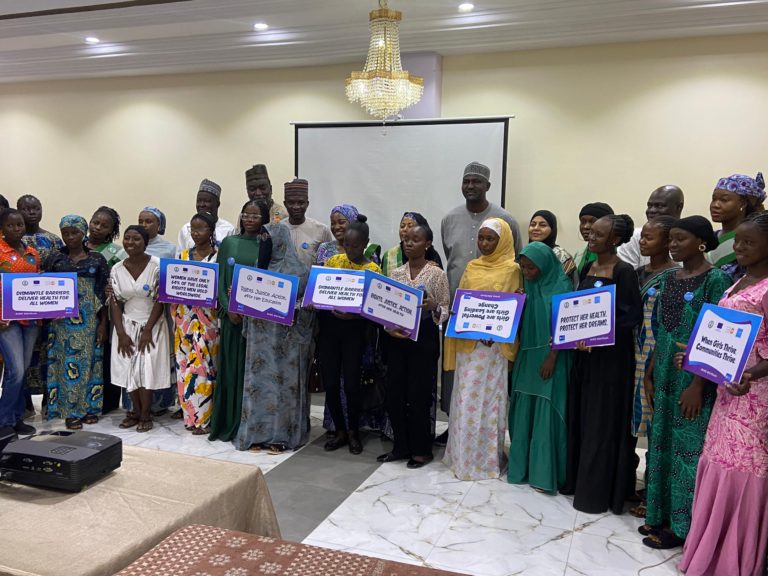
This observation took centre stage at a critical stakeholders meeting involving media, health professionals,policy makers, development partners and adolescent groups in commemora tion of the 2026 International Women’s Day.held in Yola, Adamawa state.
The event organized by the Adamawa state government in partnership with Unicef witness ed brainstorming sessions on concerns about the women, girls and adolescent under the theme “Rights, Justice and Action for All Women and Girls.”
Stakeholders resolved that addressing maternal health challenges requires collective efforts from the healthcare providers, community leaders, public, families as well as the government.
They noted that improving maternal health outcomes and protecting the rights of women and girls would not only save lives but also strengthen families and contribute to sustainable development.
Dr.Maisaratu Bakari of the Modibbo Adama University Teaching hospital Yola in her remarks decried that Nigeria falls on the category of nations with high maternity mortality rates across the globe with an estimated 993 deaths per 100,000 live births.
Bakari noted that, thousands of Nigerian women die every year from pregnancy-related challenge which most are preventable identifying several barriers to maternal deaths as limited access to skilled healthcare workers, long distances to health facilities, financial constraints and poor awareness of danger signs during pregnancy.
She warned that harmful practices such as child marriage, female genital mutilation and gender-based violence continue to threaten the health and rights of women and girls.
“Early marriage and adolescent pregnancy expose girls to severe health risks including obstructed labour, pre-eclampsia and obstetric fistula.
“Education remains one of the most powerful tools for addressing these challenges, as always educated girls are more likely to delay marriage, make informed health decisions and contribute to their communities”. Bakari emphasized.
Dr. Bakari called for strengthened primary healthcare systems, expanded health insurance coverage and increased community awareness on reproductive health.
Speaking at the occasion, Executive Chairman of Adamawa State Primary Healthcare Developmen t Agency (ADPHCDA), Dr. Sulaiman Saidu Bashir, said that, with the engagement of adolescents and young people on the issue of women health and rights, the challenge at hand is half solved.
Bashir encourage the young stars to make sure that the knowledge impacted on them at the forum is utilize effectively with a view to change the negative narrative noting that the importance of early education on health issues affecting women can never be over emphasized.
“We must look critically at the disproportionate burden women carry in areas such as healthcare, education, economic opportunities and even the effects of climate change. This gathering should lead to concrete actions that can change the narrative and improve the lives of women and girls,” he said.
In her good will message,the Chief of UNICEF Bauchi Field Office, Dr. Nuzhat Rafique, stressed that, the rights of women and girls requires the collaboration of both men and women.
Rafique applauded the contributions of the state government in supporting programmes that are useful to its citizens especially on health care delivery services
She added that access to basic rights such as healthcare, education, nutrition, clean water and protection from violence is essential for women’s empowerment calling for policies that have direct bearings on women, girls and adolescent even in the rural communities.
“Every woman and girl must be able to access her rights without discrimination, whether she lives in an urban centre or in a remote rural community,” she said.
Rafique maintained that,investments in young people would help protect the health and wellbeing of future generations.


