
Opinion
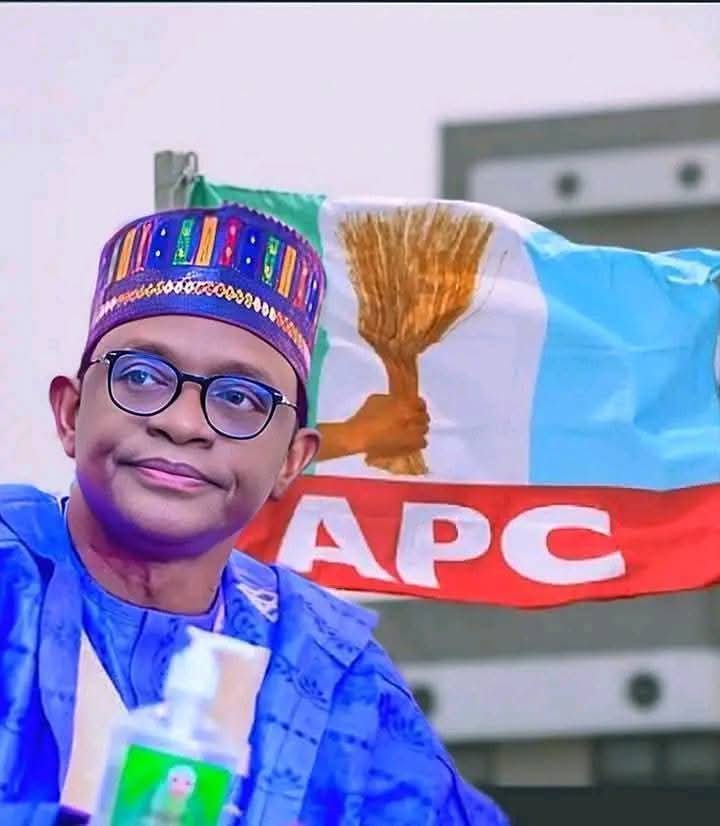
Buni Alheri Ne: The man, The mission, The legacy.

|
Getting your Trinity Audio player ready...
|
Buni Alheri Ne: The Man, The Mission, The Legacy.
By Hussaini Ibrahim Sulaiman
In the evolving political and developmental landscape of Nigeria’s Northeast, Governor Mai Mala Buni of Yobe State has carved an identity that is both strategic and deeply transformational. Six years into his administration, Buni has not only rebuilt a state once on the margins of national development — he has redefined leadership in a region long haunted by insecurity, economic decline, and fractured communities.
From the outset, Buni focused on the fundamentals — infrastructure, education, agriculture, and inclusive governance. His administration’s impact on infrastructure is not merely cosmetic. The newly completed 38-kilometre Nguru-Bulanguwa road and the Nguru Modern Market now serve as tangible markers of progress, reconnecting communities, boosting trade, and reducing travel risks for rural dwellers.
Where potholes once threatened lives and livelihoods, smooth roads now stretch across vast distances, linking farmers to buyers and students to classrooms. In Damaturu, the state capital, the ultramodern markets and ongoing road networks are reshaping the urban economy, enabling small businesses to thrive in a stable environment. The revitalization of township roads in Potiskum, Gashua, and Geidam has also translated into increased vehicular traffic, safer transport routes, and economic confidence in regions previously neglected.
Governor Buni’s attention to education reform has been one of his most ambitious and far-reaching policies. Over 2,500 classrooms have been constructed or rehabilitated across the state since 2019, with thousands of qualified teachers recruited and trained to address years of learning disruptions. Recognizing that rebuilding infrastructure without rebuilding minds is a lost cause, Buni launched initiatives targeting the girl-child, establishing all-girls boarding schools in communities where early marriage and insecurity once curtailed academic dreams.
His administration’s collaboration with international partners like UNICEF and Save the Children on back-to-school campaigns and safe learning environments has returned over 300,000 children to classrooms statewide. This education-first approach has laid a foundation for future economic mobility and civic participation, especially in remote and underserved areas.
The agricultural revolution under Buni’s leadership has similarly rewritten the story of rural resilience. Through strategic interventions such as the distribution of over 100,000 metric tonnes of fertilizer, access to hybrid seedlings, and the expansion of irrigation schemes in areas like Machina and Bade, the state has moved away from subsistence farming to productivity-driven agro-enterprise. Yobe’s green economy is growing steadily, with dry season farming now a core component of household income in communities once cut off by climate shocks and insurgency.
The recent launch of the Yobe Agricultural Empowerment Programme is a bold step in consolidating this momentum — aiming to empower thousands of farmers, reduce food scarcity, and enhance agribusiness profitability.
Behind these material successes is a rare political sophistication. As former National Caretaker Chairman of the APC, Governor Buni demonstrated a unifying approach that rescued the ruling party from implosion. He brokered peace among rival factions, organized a credible national convention, and attracted high-profile defectors, including sitting governors and federal lawmakers. His calm demeanor, strategic mind, and refusal to embrace political vendettas earned him a reputation as a statesman — not just a party man.
That same conflict-resolution skillset is evident in his governance model in Yobe: focused, consensus-driven, and vision-oriented.
Perhaps the most understated yet profound achievement of Buni’s six-year tenure lies in his peacebuilding and reintegration efforts. Yobe, once destabilized by Boko Haram, is gradually becoming a model for post-conflict recovery.
The governor has prioritized community dialogue, vocational reintegration for repentant ex-combatants, and support for orphans and widows. IDPs in places like Buni Yadi, Gujba, and Gulani have been resettled into safe housing with accompanying health, education, and water infrastructure. While the scars of insurgency are still visible, the state’s response has shifted from reactive to proactive.
The Yobe State Ministry of Humanitarian Affairs, set up by Buni, coordinates relief and resilience programmes, while security architecture has been fortified through collaboration with federal forces and local vigilantes. The result? A significantly reduced rate of attacks and improved civilian-military relations.
What sets Governor Buni apart is not just what he builds — but how he builds trust. His administration is known for stakeholder inclusion, humility in power, and a “listening governance” model where community feedback influences decisions. His slogan, Buni Alheri Ne — loosely translated as “Buni is a blessing” — has transcended political marketing to become a genuine belief among many citizens who have witnessed real transformation under his leadership.
As 2027 draws nearer and conversations around national leadership intensify, many political observers argue that Buni’s track record, party-building experience, and development-focused governance make him a bridge between the country’s North and South, between tradition and modernity, and between politics and genuine service. Whether on the farms, in the schools, or along the roads he has rebuilt, Buni’s legacy continues to speak volumes — not just for Yobe, but for the future of inclusive leadership in Nigeria.


