
Opinion
Let Abba Breathe: Preserve Your Dignity Before It’s Too Late

|
Getting your Trinity Audio player ready...
|
Let Abba Breathe: Preserve Your Dignity Before It’s Too Late
By Abba Dukawa
There is a growing risk in prioritizing personal loyalty over institutions—a tendency that can weaken systems and erode accountability. When individuals or groups elevate loyalty above institutional checks and balances, they often overlook due process, creating power imbalances and opening the door to abuse and corruption.
At this moment, RMK’s non-stop talking reveals his anxiety about losing grip on power over the governor and the administration . While Governor Abba stays silent, Kwankwaso’s voice is getting louder a sign of unease Supposedly Kwankwaso should guard his tongue . As the Prophet (PBUH) said, ‘Whoever believes in Allah and the Last Day, let him speak well or remain silent’ . Controlling his speech can avoid harm to followers and opponents alike .
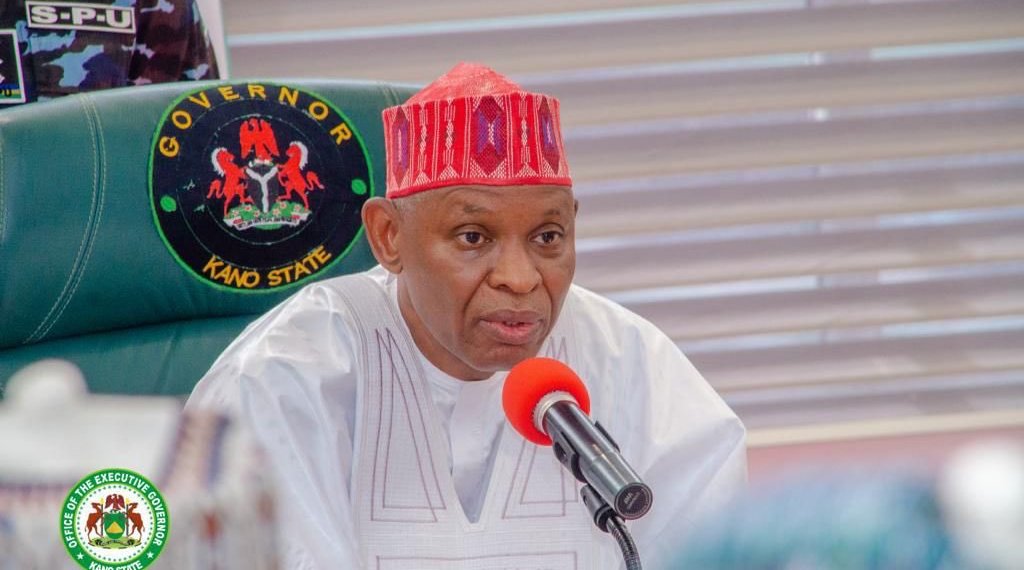
Like many godfather–godson relationships in Nigeria’s political history, Kano State Governor Abba Kabir Yusuf appears to have fallen out with his mentor, Senator Rabiu Musa Kwankwaso. In a dramatic twist, their four-decade-long relationship—strengthened by political collaboration and marital ties has become strained, as personal ambition and political survival put their bond to the test.
The unexpected fallout has caught many by surprise, with political battle lines now clearly drawn. Unless a major compromise is reached, both leaders may soon become openly critical of one another.
At the heart of the crisis lies the godfather’s familiar expectation of unquestioned loyalty, rooted in the belief that the godson’s political rise and survival are owed entirely to him. Opposing this is the godson’s growing insistence on autonomy, driven by the conviction that he has come of age politically and must now chart his own course.
The looming defection has reopened old rivalries in Kano politics, revived long-standing debates about the volatility of godfather–godson relationships, and reshaped political calculations ahead of the 2027 general elections. Governor Yusuf’s decision, insiders insist, is “irreversible,” even if it leads to a complete rupture with Kwankwaso.
Political analysts argue that the crisis was inevitable. With competing ambitions at play, they say, a rupture was only a matter of time. In Kano, however, the rift has come as a shock, given the tightly knit nature of the Kwankwasiyya Movement that swept Yusuf to power.
Insiders reveal that Kwankwaso’s inner circle has grown uneasy with Yusuf’s visible achievements, fearing that he may outshine their leader’s legacy. This anxiety, combined with internal disputes and litigations within the NNPP, is believed to have triggered the fallout. “They don’t want him to continue,” a source said. “Even if he stays, Kwankwaso’s camp will not give him the ticket. They are allegedly pushing for the deputy governor instead allegedly”
Sources close to both Governor Yusuf and Senator Kwankwaso maintain that the feud is driven by political survival instincts rather than personal grievances. Some analysts believe Kwankwaso’s disappointment stems from Yusuf’s growing independence he had expected unwavering loyalty.
As Yusuf asserted himself in governance, Kwankwaso reportedly felt his influence waning. Others suggest the Kwankwasiyya leader assumed he would retain control, having played a key role in appointments during the early days of the administration.
The Governor of Kano State now faces ridicule and insults on social media over his alleged plans to defect from the Kwankwasiyya camp. Loyalists accuse him of betraying Kwankwaso, rather than acknowledging his restraint in choosing not to publicly recount his unpleasant experiences under the total control of the Kwankwasiyya national leader.
Before Kwankwasiyya loyalists rush to crucify Abba Yusuf, they should reflect on the proper place of words such as “nemesis” and “karma” within the political trajectory of their mentor, Rabiu Musa Kwankwaso (RMK). Only then can they honestly confront the central question: in politics, is it truly a betrayal to betray a betrayer?
In political reality, what is often labeled “betrayal” is simply a godson breaking free from the grip of a godfather—a legitimate quest for autonomy. The signs are unmistakable. The moment has arrived for the leader of the Kwankwasiyya Movement to step aside gracefully and preserve his dignity before events overtake him.
As developments continue to unfold, this period will likely be remembered as the point at which Kwankwaso’s politics entered a new and irreversible phase. Ironically, while Kwankwasiyya ideologues frame the struggle as disloyalty, others rightly view it as a justified pursuit of political independence.
From a rational political standpoint, the situation reflects an intense struggle for supremacy—an unmistakable effort by the Governor of Kano State to wrest control of the political throne from the leader of the Kwankwasiyya Movement.
All indications suggest that Governor Abba Yusuf’s maneuver is aimed at consolidating authority and freeing himself from total subordination to Kwankwaso’s dominance. Whatever path the Kano State governor ultimately chooses, his actions portray him as a leader asserting courage at a defining moment.
He presents himself not as a villain, but as a political actor determined to chart his own course. What is unfolding in Kano resembles a political Game of Thrones—a contest defined by survival, adaptation, and power.
Since news of Abba Yusuf’s defection broke, the body language of government officials suggests that the shift is already underway—it is only a matter of time. The governor has maintained a low profile, refraining from issuing joint statements with Kwankwaso, while the Kwankwasiyya leader has held tense meetings with associates and NNPP members across the state, delivering pointed remarks.
Recurring phrases from Kwankwaso’s recent speeches further reveal his state of mind: A ci daɗi lafiya (“Eat well”), Butulawa (“Betrayal”), Mutane masu daraja (“People of honor”), ’Yan amana (“Trusted ones”), and Tsallaka titi (“Crossing over”). Let Kwankwaso understands the fleeting nature of time: it comes and goes. Embracing this reality means adapting to its flow, for nothing certain except God’s power . But if he chooses to defy the tide he’ll be erased from Kano’s political narrative.
The line has already been drawn in Kano politics – it’s a struggle between light and darkness or situation involves good versus evil, or truth versus falsehood. Let Abba Breathe: Preserve Your Dignity Before It’s Too Late.
Dukawa can be reached at abbahydukawa@gmail.com


