
Opinion
The Return of Mai Mala Buni: APC’s Stabilising Voice at a Defining Moment

|
Getting your Trinity Audio player ready...
|
The Return of Mai Mala Buni: APC’s Stabilising Voice at a Defining Moment
By Yusuf Ali
Just four days after the All Progressives Congress (APC) held its 15th National Executive Committee (NEC) meeting on Friday, December 19, 2025, at the State House Conference Centre, Abuja—where far-reaching resolutions were adopted—the party has taken a decisive step to confront its internal challenges ahead of the 2027 general elections.
The NEC meeting formally welcomed several high-profile defectors into the APC, including six serving governors who recently crossed over from the Peoples Democratic Party (PDP): Governors Siminalayi Fubara (Rivers), Agbu Kefas (Taraba), Peter Mbah (Enugu), Sheriff Oborevwori (Delta), Douye Diri (Bayelsa), and Umo Eno (Akwa Ibom). While the development strengthened the party numerically and politically, it also brought to the fore a sensitive and potentially destabilising issue—the fate of existing state party leaderships.
Although there was no blanket dissolution of state executives, the NEC deliberated extensively on the status of party structures in states affected by the defections. In line with long-standing APC tradition, the NEC reaffirmed that a sitting governor remains the Leader of the Party in his or her state. This position, however, immediately generated friction in some states—most notably Rivers and Plateau—where existing APC leadership structures had previously been in conflict with the new governors.
In response, the NEC urged tolerance and flexibility, signalling that state party structures may need to be harmonised or reorganised to accommodate new political realities and ensure cohesion. Against this backdrop, it was neither surprising nor coincidental that President Bola Ahmed Tinubu, on Wednesday in Lagos, inaugurated a Committee on Strategy, Conflict Resolution and Mobilisation to proactively address internal party disputes as the APC prepares for 2027.
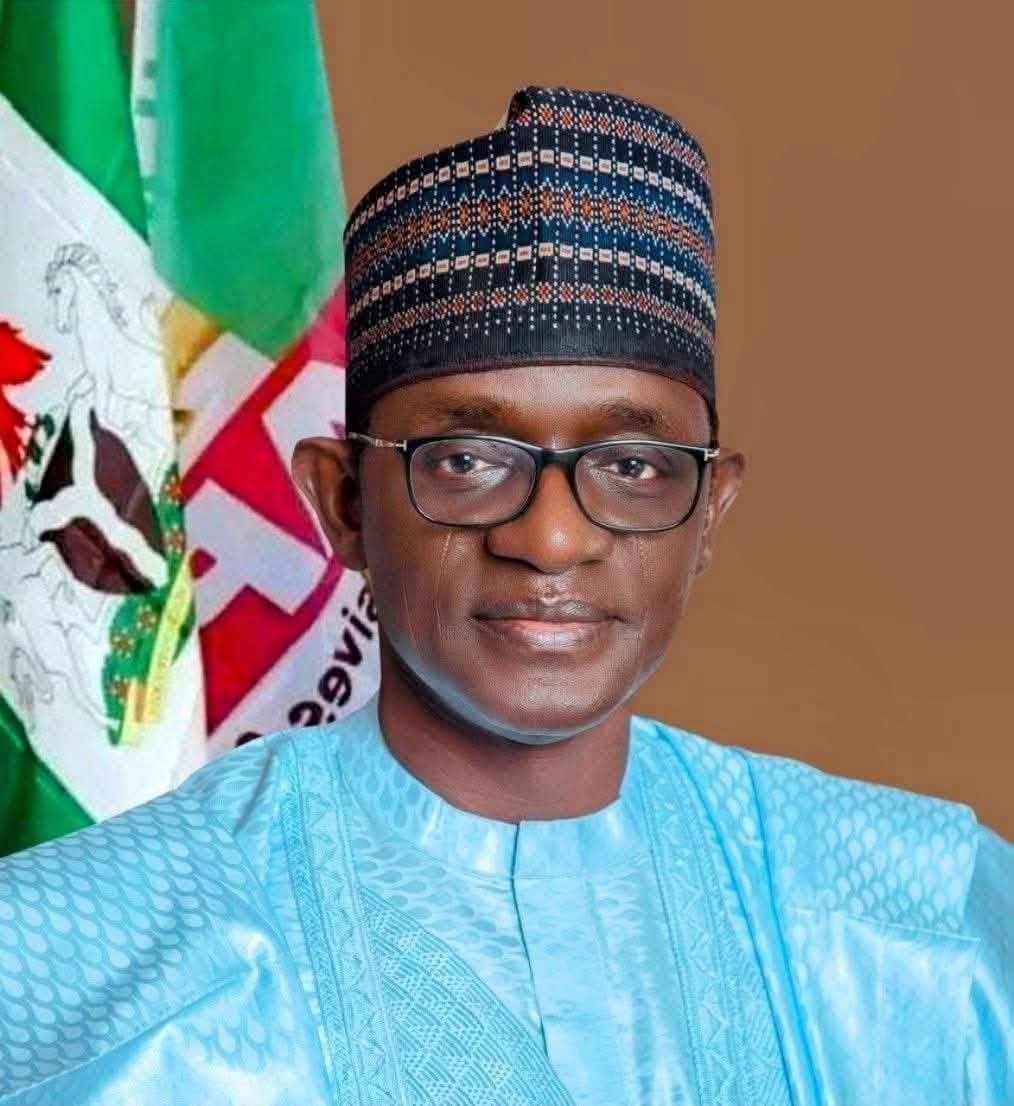
The high-powered committee is composed of governors, members of the Federal Executive Council, and other key stakeholders of the party. At its helm is the Governor of Yobe State, Hon. Mai Mala Buni, as Chairman, with former APC National Legal Adviser, Muiz Banire, serving as Member/Secretary.
Other members include Senator Adamu Aliero; Chairman of the Nigeria Governors’ Forum and Governor of Kwara State, Abdulrahman AbdulRazaq; Chairman of the Progressive Governors’ Forum and Governor of Imo State, Hope Uzodimma; Governors Hyacinth Alia (Benue), Umar Namadi (Jigawa), Bassey Otu (Cross River), Abiodun Oyebanji (Ekiti), and Sheriff Oborevwori (Delta).
Also on the committee are Governors Uba Sani (Kaduna) and Siminalayi Fubara (Rivers); Minister of Marine and Blue Economy, Adegboyega Oyetola; Minister of State for Defence, Bello Matawalle; former Governor of Kogi State, Yahaya Bello; and Senior Special Assistant to the President on Political Affairs, Alhaji Ibrahim Masari.
At the inauguration, Governor Mai Mala Buni expressed gratitude for the confidence reposed in him and other members, assuring the party of their commitment to the task ahead.
“The committee will engage in strategic consultations to develop an all-encompassing, productive, and result-oriented strategy that will stand the test of time. We shall implement a system that gives everyone—especially aggrieved parties—a sense of belonging, inclusion, and renewed hope,” Buni said.
He added that the committee would also adopt proactive measures to anticipate threats and resolve conflicts before they escalate, urging members “not to allow personal interests and sentiments to override the collective interest and purpose for which this committee was constituted.”
Governor Buni’s appointment is widely seen as a return to familiar terrain. During his tenure as Chairman of the Caretaker/Extraordinary Convention Planning Committee, he successfully navigated some of the APC’s most turbulent internal crises, rebuilt fractured structures, and steered the party toward stability and unity. Having experienced intra-party conflicts firsthand, he understands their complexity, depth, and political consequences.
At a time of mass defections into the governing party and rising expectations among party faithful, the urgency for decisive, inclusive, and tactful leadership cannot be overstated. It is this urgency that underpins the confidence Nigerians—and party stakeholders in particular—have in the committee’s mandate.
President Tinubu captured this sentiment succinctly at the inauguration when he said: “I have an experienced man as the Chairman. He has seen a lot of conflicts and understands the genesis of our party, the APC. He will do a very good job of bringing all of us together in one fold.”
Indeed, the rationale behind the overwhelming support from the President, the NEC, and stakeholders across the party for Mai Mala Buni is clear. It lies in his proven political sagacity, capacity for hard work, calm temperament, extensive network, and tested loyalty to the party’s progressive ideals.
For a large and governing party like the APC, Governor Buni has consistently championed compromise, internal democracy, and consensus-building. He has approached internal disagreements as family matters—resolving them firmly yet persuasively—earning him a reputation as a stabilising force and a unifying voice across party divides.
Governor Mai Mala Buni has his work clearly cut out for him. As always, he is not only expected to hit the ground running but also make a significant impact in resolving the party’s internal conflicts and positioning the APC for success in 2007.


