
Opinion
Governor Mai Mala Buni And The Recipe For Yobe’s Development

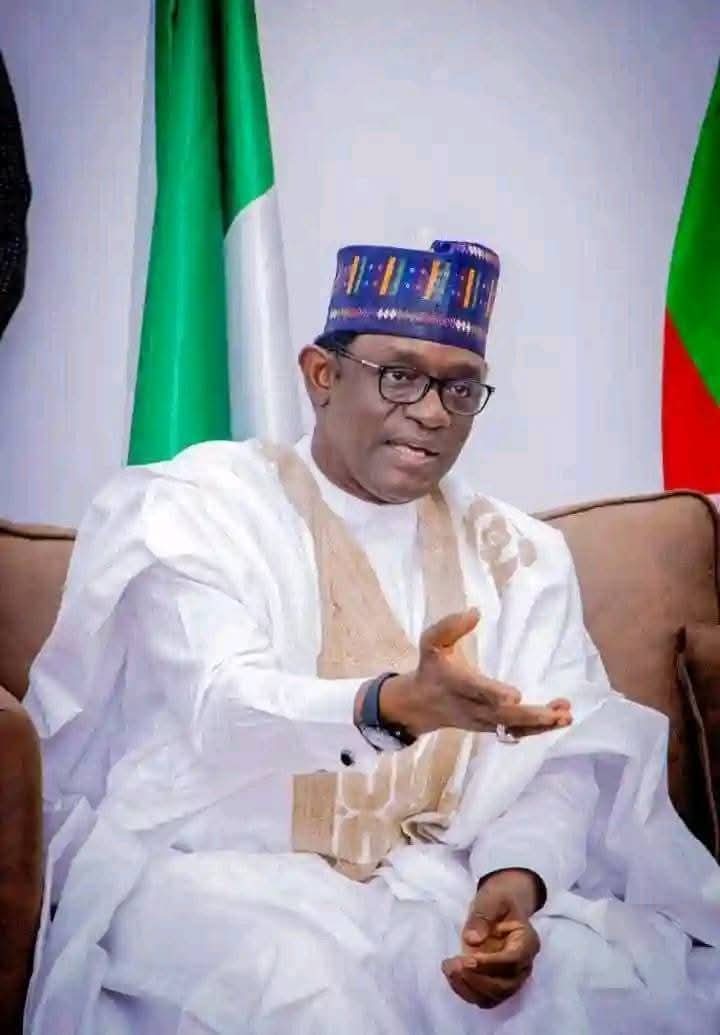
|
Getting your Trinity Audio player ready...
|
Governor Mai Mala Buni and the Recipe for Yobe’s Development
By Hussaini Ibrahim
When Governor Mai Mala Buni assumed office on May 29, 2019, he articulated a bold vision to rebuild Yobe State — a vision anchored in people-centered development, post-conflict recovery, and good governance.
From his first year in office, Buni prioritized infrastructure, education, healthcare, agriculture, housing, youth empowerment, and peacebuilding, laying a robust foundation that has transformed Yobe from a post-insurgency recovery zone to a development-focused entity.
Six years down the line, his achievements are not just visible but measurable — touching lives in both rural and urban communities.
This article examines, in depth, the projects Governor Buni has initiated and executed across key sectors from 2019 to date.
Education: Renewing the Future Through Investment
Governor Buni’s administration wasted no time in launching the State of Emergency on Education in 2019, recognizing education as the cornerstone of long-term development. The government undertook a statewide audit of schools, revealing infrastructural decay, low teacher capacity, and poor student enrollment in several LGAs. This diagnosis led to a systematic response.
Between 2019 and 2024, the state government constructed, renovated, and furnished over 300 schools, including classrooms, staff quarters, administrative blocks, and fencing. Notable among them are the Government Girls College Nguru, Government Day Secondary School Damaturu, and new model schools in Machina, Yusufari, and Potiskum. These schools are equipped with laboratories, ICT rooms, and libraries.
The government also recruited and trained over 2,000 qualified teachers, launched a teachers’ welfare enhancement scheme, and provided annual instructional materials such as textbooks, whiteboards, and desks across public schools.
In 2022, Governor Buni inaugurated the Education Trust Fund (YETFund), a strategic financing mechanism that has generated over ₦2 billion from levies, donor support, and state contributions, now used for infrastructure, scholarship, and special interventions.
At the tertiary level, Yobe State University has experienced significant growth. The Faculty of Law received full accreditation in 2021, while new departments in engineering and medical sciences were introduced. The university also commissioned a Digital Library Complex, upgraded hostels, and expanded its Senate Building to support academic governance.
Healthcare: Building Systems That Save Lives
From the outset, Governor Buni emphasized accessibility and affordability of healthcare, particularly for rural dwellers. His flagship initiative was the construction of one functional Primary Healthcare Centre (PHC) in each of the 178 political wards — a feat completed in phases between 2020 and 2023. Each PHC is equipped with maternity units, drug stores, solar power, and boreholes.
General hospitals in Potiskum, Gashua, Damaturu, Buni Yadi, and Geidam underwent comprehensive upgrades. The Damaturu Specialist Hospital received a new trauma center, diagnostic lab, and dialysis unit.
In 2021, the state established the Yobe State Contributory Healthcare Management Agency (YCHMA), providing health insurance coverage to over 35,000 public workers and vulnerable citizens. This has reduced financial barriers to accessing healthcare and improved attendance at hospitals.
Additionally, over 800 nurses, doctors, and auxiliary health workers were recruited and deployed to underserved areas. The state also strengthened its partnership with international agencies like WHO and UNICEF to improve maternal and child health, immunization, and malaria control.
Infrastructure and Roads: Connecting People and Prosperity
Recognizing the strategic importance of road infrastructure, Buni’s government embarked on aggressive construction and rehabilitation efforts to connect towns, boost commerce, and ease mobility.
From 2019 to 2024, over 520 kilometers of roads were constructed or rehabilitated. Key road projects include:
Damaturu–Buni Gari Road (77km)
Nguru–Machina Road (48km)
Jakusko–Gashua Road (35km)
Fika–Gadaka–Mutai Road (67km)
Potiskum–Danchuwa–Dogon Kuka Road
Township roads in Damaturu, Potiskum, and Gashua totaling over 120km, with drainage, culverts, and solar streetlights.
These roads have reduced travel time, boosted market access for farmers, improved school attendance, and facilitated rapid response to emergencies.
Bridges and culverts in flood-prone areas like Gulani and Yunusari LGAs were reconstructed to withstand climate shocks, reflecting Buni’s focus on climate-resilient infrastructure.
Housing and Urban Renewal: Shelter with Dignity
Governor Buni’s administration launched the Yobe Housing Development Programme in 2020 to provide affordable shelter for citizens. By 2024, over 2,500 housing units were constructed across major towns:
1,200 units in Damaturu Northern Bypass Estate
500 units in Potiskum Township Estate
300 units each in Gashua and Nguru
The houses come with tarred access roads, electricity, water supply, and recreational facilities. Civil servants, returnee families from displacement, and vulnerable citizens have benefited from these homes.
Urban renewal in Damaturu has given the state capital a facelift — with green spaces, smart bus stops, drainage channels, pedestrian walkways, and beautification projects improving quality of life.
Agriculture and Livelihoods: From Relief to Recovery
Agriculture has remained a key pillar of Yobe’s economy. Since 2019, the Buni administration has invested in mechanization, agro-processing, irrigation, and input support.
Over 15,000 metric tonnes of fertilizer are subsidized annually.
More than 300 tractors and 600 implements were distributed to cooperative societies and LGAs.
Anchor Borrowers’ Scheme partnerships supported over 20,000 smallholder farmers in rice, sesame, millet, and maize cultivation.
Irrigation schemes at Nguru Lake Basin, Tarmuwa, and Jumbam allow for dry-season farming. The government also established farmer training centers in Geidam and Fune, where youth learn modern techniques, agro-processing, and climate-smart farming.
Animal husbandry received attention too — with vet clinics upgraded and vaccination campaigns extended to thousands of herds across the state.
. Youth and Women Empowerment: Driving Inclusive Growth
Since 2019, over 25,000 youths and women have been empowered through skill acquisition, entrepreneurship support, and grants.
The Yobe Empowerment Support Scheme (YESS) trains youth in tailoring, ICT, poultry farming, welding, and mechanics. Graduates are equipped with starter packs and access to soft loans.
Through the Yobe Women Empowerment Fund (YOWEF), over 8,000 women entrepreneurs received grants ranging from ₦50,000 to ₦200,000. Markets were built or renovated to support female traders, especially in Bade, Gulani, and Tarmuwa LGAs.
In 2022, the Youth Digital Bootcamp trained over 2,000 graduates in coding, e-commerce, and freelancing — many of whom now earn remote income globally.
Security and Peacebuilding: Stability Before Progress
Peace has been central to Governor Buni’s development strategy. He inaugurated the Yobe State Security Trust Fund in 2021, equipping local vigilante groups, funding logistics for federal forces, and constructing security outposts in key border towns.
Thousands of displaced families have returned home through community stabilization programs. Projects include resettlement homes in Gujba and Gulani, school reconstruction in Buni Yadi, and peace dialogues involving traditional, religious, and youth leaders.
His government also launched rehabilitation programs for ex-combatants and affected youth, providing skills and psychosocial support.
A Legacy Written in Concrete, Compassion, and Capacity
From education to roads, healthcare to housing, agriculture to peacebuilding, Governor Mai Mala Buni has proven that strategic planning, financial discipline, and inclusive leadership can accelerate development even in post-conflict environments.
His administration continues to focus on long-term resilience, youth empowerment, and institutional reform. As Yobe moves into its next chapter, the groundwork laid by Buni — from 2019 to date — is widely seen as a template for sustainable progress in Nigeria’s North-East.
Indeed, his leadership is not only a recipe for Yobe’s development — it is a case study in what deliberate governance can achieve in a complex socio-political environment.
Hussainiibrahim470@gmail.com – 09065350001


