
Opinion
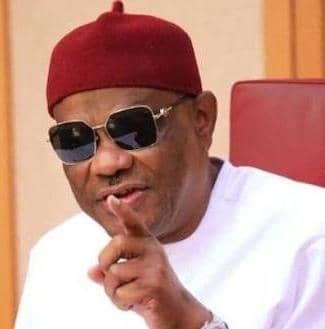
The Price of influence: Why wike is always in the headlines

|
Getting your Trinity Audio player ready...
|
The Price of influence: Why wike is always in the headlines
By Dr. Grema Kyari
In Nigeria’s turbulent political landscape, there are politicians who chase relevance—and there are those whose relevance chases them. Chief Barrister Nyesom Ezenwo Wike, CON, belongs firmly to the latter category. Few names dominate headlines across online platforms, print media, television debates, and street-level political conversations the way Wike’s does. Not because he seeks controversy, but because power, performance, and principle rarely coexist without friction.
Today, his name is mentioned in relation to the Rivers State political crisis, particularly involving Governor Siminalayi Fubara, a man he politically supported and anointed. The narrative pushed by his critics is simplistic: that Wike seeks control. The truth, however, is more complex and rooted in political structure, loyalty, and the burden of succession politics—a challenge faced by many political leaders who invest deeply in continuity.
Yet, even beyond Rivers State, Wike has become a national political subject.
THE WIKΕ PARADOX: PDP MAN, APC TARGET, PRESIDENTIAL TRUST
Wike’s appointment as Minister of the Federal Capital Territory (FCT) by President Bola Ahmed Tinubu has unsettled many political actors. The APC national leadership has repeatedly insisted he is not their member, yet some within the same APC have openly protested, calling for his removal—an irony that exposes internal contradictions.
Why the hostility?
Because Wike performs.
President Tinubu famously described him as “Mr. Projects”, not out of sentiment, but out of visible results. Just as Wike left Rivers State with enduring infrastructural legacies—roads, flyovers, hospitals, schools, urban renewal—he has replicated the same project-driven governance in the FCT. Residents of Abuja, traditional rulers, professionals, traders, and civil servants have all attested to the pace and visibility of development under his watch.
Ironically, the same forces allegedly sponsoring protests against him are external to his ministry, threatened by efficiency, order, and reform.
2023 ELECTIONS AND THE PRICE OF INDEPENDENT THINKING
Wike’s role in the 2023 general elections, particularly his support for President Tinubu, placed him at the center of political realignments. In Nigeria, independence of thought is often punished more than failure. His stance disrupted long-standing assumptions that party loyalty must equal political silence—even when internal justice is absent.
That choice came with consequences, especially within the PDP leadership, where power tussles involving figures like Bala Mohammed, Seyi Makinde, and others played out both politically and legally. Yet, in court after court in Abuja, Wike emerged victorious—not by noise, but by law.
A BIOGRAPHY ROOTED IN GRASSROOTS POWER
Unlike many who discovered politics at the presidential level, Nyesom Wike’s political journey began from the ground up.
1998: Entered politics as a two term Local Government Chairman in Rivers State.
Rose through party structures with consistency and resilience.
Served in strategic roles that deepened his understanding of governance and power as a Chief of Staff to H.E Rotimi Amaechi, State Minister of Education during H.E Goodluck Jonathan
Became Governor of Rivers State for eight years where he redefined subnational infrastructure delivery.
Today, he stands as Minister of the FCT and a national leader within the PDP, whether acknowledged by critics or not.
Importantly, Wike has never left the PDP since 1998.
This is where the hypocrisy of Nigeria’s political space becomes glaring.
THE GREAT IRONY OF PARTY LOYALTY
Many of those who now question Wike’s loyalty are political migrants themselves. Atiku Abubakar, Peter Obi, Rotimi Amaechi, Nasir El-Rufai, Rabiu Musa Kwankwaso, and others who dominate today’s political discourse have moved from party to party in pursuit of presidential ambition.
Wike did not.
Yet, he is the one constantly interrogated.
THE POLITICAL GLADIATOR FACTOR
What truly unsettles Wike’s opponents is not his rhetoric, but his political attributes:
A grassroots mobilizer with firm control of his constituency through thick and thin.
A strategic thinker, deeply calculative and patient.
A man who never accepts impossibility as an outcome.
A leader blessed with uncommon political courage, ready to deploy resources, intellect, and alliances to reach his destination.
In Nigerian politics, such men are rarely loved—but they are always relevant.
CONCLUSION: HISTORY IS WATCHING
Nyesom Ezenwo Wike is consistent, effective, resilient, and impactful. The volume of attacks against him is directly proportional to the weight of his influence.
Those calling for his removal today must answer a simple question:
Can Nigeria afford to punish performance?
As history continues to record, one fact remains clear—you may dislike Wike, you may oppose him, but you cannot erase him.
And that, perhaps, is the real reason his name never leaves the headlines in Nigeria and beyond
Dr. Grema kyari is a member PDP national carataker working committee.


